
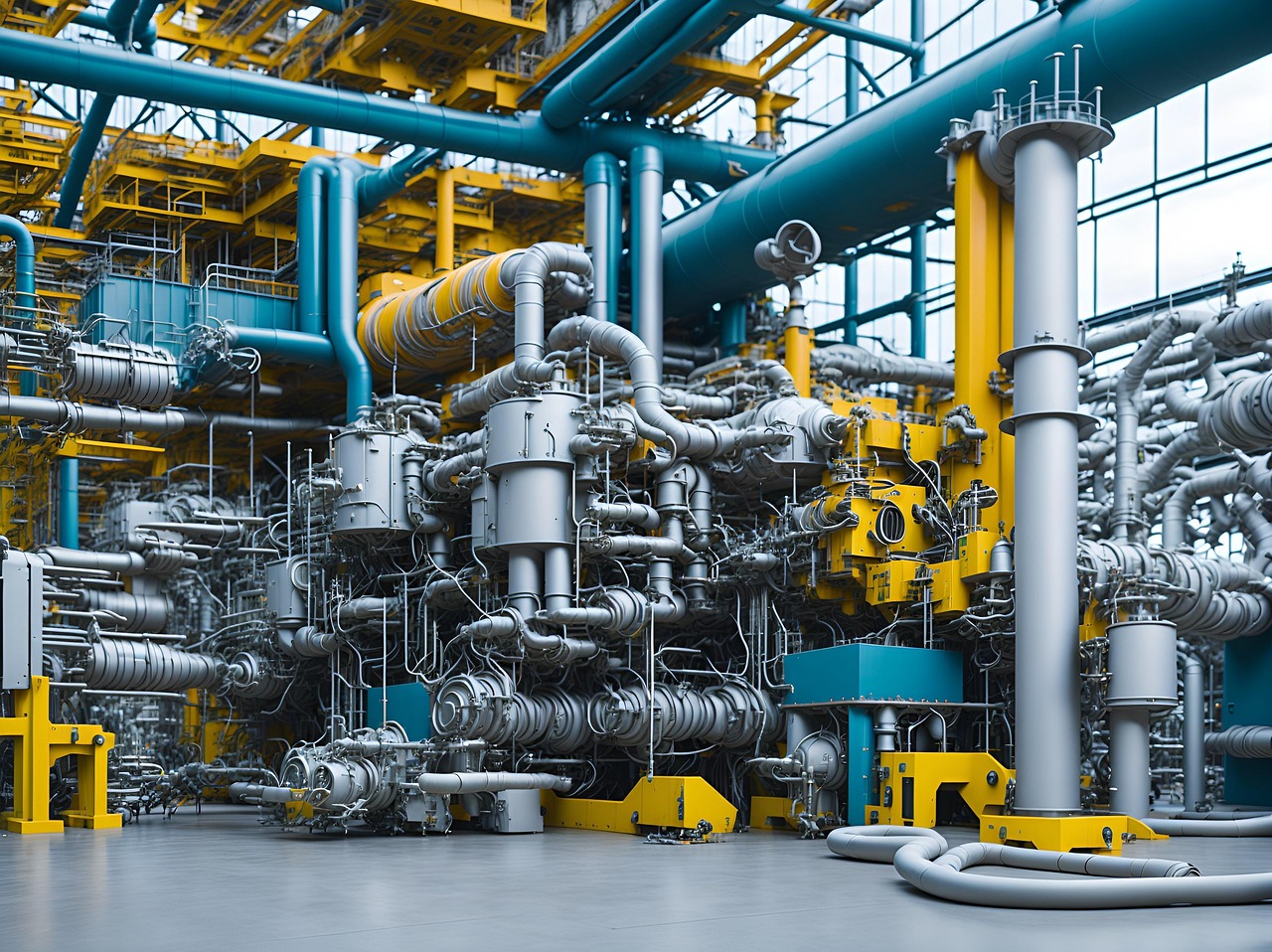
In the human body, the brain makes the decisions, but nothing happens without the nervous system and musculature. The brain sends a signal, the nerves transmit it, and the muscles execute the action. If the nerves are damaged or the muscles are weak, the body fails—regardless of how brilliant the brain is.
In the world of modern industrial plants—whether it’s a chemical refinery, a pharmaceutical manufacturing line, or a power generation facility—General Electrical and Instrumentation (E&I) Engineering plays the exact same role.
While process engineers design the chemical reactions and mechanical engineers design the physical vessels, it is the E&I engineers who provide the nervous system (control and feedback) and the musculature (power and actuation) that bring the plant to life.
What is E&I Engineering?
E&I Engineering is a multidisciplinary field that bridges the gap between electrical power systems and automated control systems. It encompasses two distinct but deeply intertwined domains:
Electrical (The Musculature): This is the power side. It involves the generation, distribution, and utilization of electrical energy. It powers the massive motors, the heaters, the lighting, and the safety systems.
Instrumentation (The Nervous System): This is the sensory side. It involves the devices that measure pressure, temperature, flow, and level. It includes the logic solvers (PLCs and DCS) that interpret these signals and send commands back to the field.
Together, they ensure that the "brain" of the plant (the control room operators) can "feel" what is happening and "move" the process to achieve the desired output.
The Nervous System: Sensing and Communicating
Imagine a massive reactor vessel. How do you know if the pressure is too high? How do you know if the temperature is optimal for the reaction?
You need sensors. Instrumentation engineering is responsible for selecting, sizing, and installing these sensors. But it goes beyond just hardware. It involves:
Signal Integrity: Ensuring that the signal from a pressure transmitter travels hundreds of meters to the control room without being corrupted by electrical noise.
Control Logic: Programming the Distributed Control System (DCS) to react to changing conditions.
Safety Instrumented Systems (SIS): Designing the "reflexes" of the plant. If a sensor detects a dangerous condition, the SIS must shut down the process in milliseconds, just as a human pulls their hand back from a hot stove.
Without precise instrumentation, the plant is flying blind.
The Musculature: Powering the Action
The most sophisticated control system in the world is useless if it cannot actually do anything. This is where the Electrical side of E&I shines.
When the control system decides to open a valve or start a 5,000-horsepower compressor, it relies on electrical engineering. This includes:
Power Distribution: Designing the switchgear, transformers, and motor control centers (MCCs) that deliver safe, reliable power to every corner of the facility.
Variable Frequency Drives (VFDs): Acting as the "fine motor skills" of the plant, VFDs allow precise control over motor speeds, saving energy and improving process control.
Hazardous Area Classification: In environments with explosive gases or dust, electrical equipment must be specially designed to prevent sparks. This is a critical safety function of E&I engineering.
The Integration Challenge: Where the Magic Happens
The true value of E&I engineering lies in the integration of these two fields.
A pump is just a piece of metal until it is wired to a power source (Electrical) and connected to a flow transmitter (Instrumentation) that tells the VFD to speed up or slow down.
When E&I is done right, the plant runs smoothly, efficiently, and safely. When it is done poorly, you get:
Production Downtime: A faulty sensor causes a false trip.
Safety Hazards: A miswired motor causes a fire.
Inefficiency: Poor power factor or inaccurate flow readings waste energy and money.
The Future of E&I: Smart and Connected
As we move into the era of Industry 4.0, the role of E&I engineering is expanding. The "nervous system" is becoming smarter.
Smart Instruments: IO-LINK, HART and Foundation Fieldbus instruments provide not just a measurement, but also diagnostic data about their own health.
IIoT Integration: E&I engineers are now tasked with bridging the gap between the plant floor and the cloud, enabling predictive maintenance.
Cybersecurity: As the nervous system becomes connected to the internet, protecting it from digital attacks has become a core E&I responsibility.
Conclusion
General Electrical and Instrumentation Engineering is not just about wiring diagrams and P&IDs. It is the discipline that gives an industrial plant its senses and its strength.
It is the silent guardian that ensures the pressure doesn't get too high, the motor doesn't burn out, and the lights stay on. So, the next time you look at a sprawling industrial facility, remember: the pipes and vessels are the skeleton, but the E&I system is the lifeblood that makes it move.